
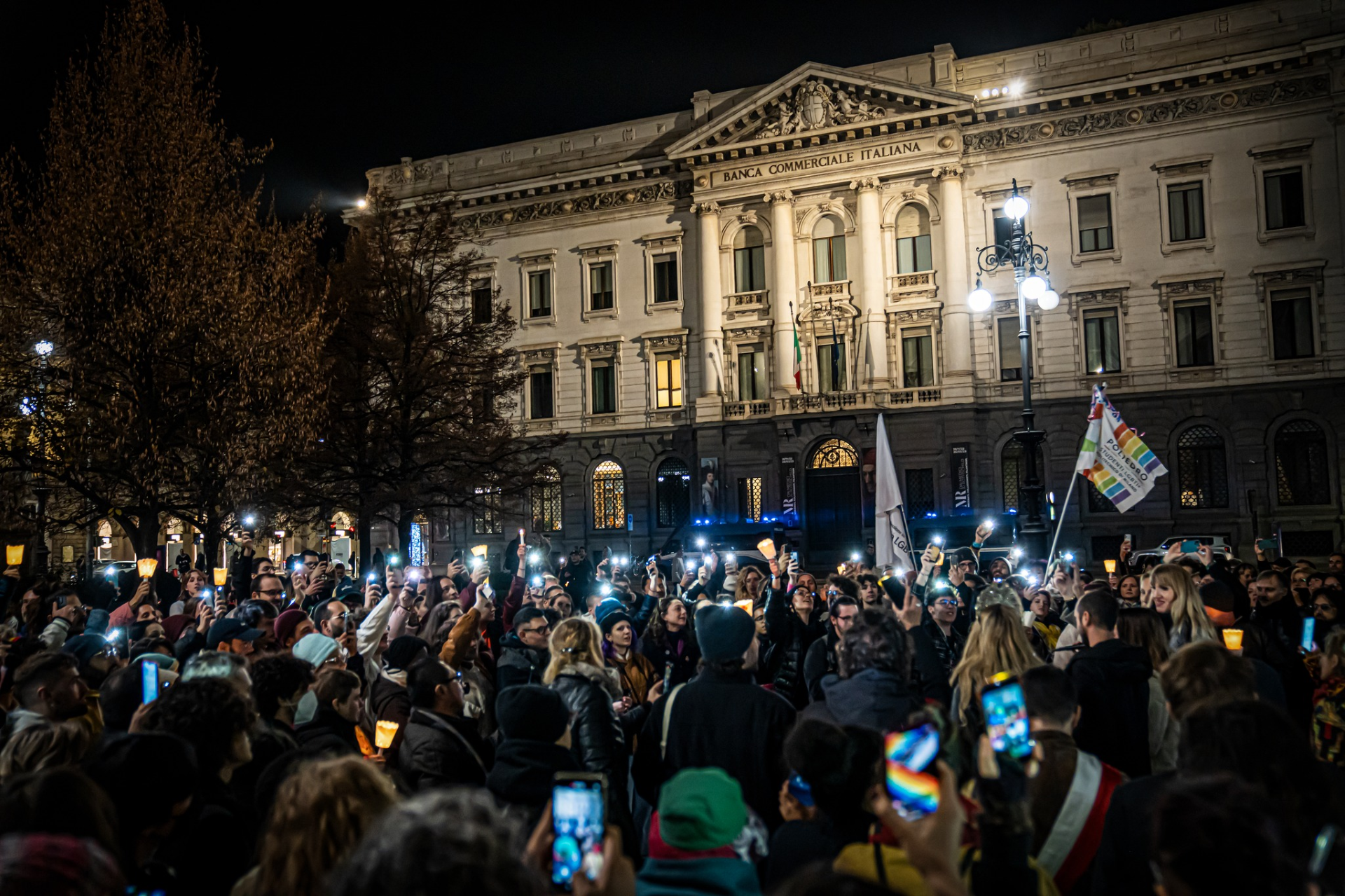
Milan Honors the Victims of Transphobic Violence: Memory, Rights, and Civic Responsibility
On Sunday, 23 November 2025, the city of Milan hosted the fourth edition of the Trans Lives Matter March, a silent procession held each year on the occasion of the Transgender Day of Remembrance (TDOR) to honor the victims of transphobic violence worldwide.
The march was conceived and initiated by Monica Romano, Milan City Councillor and long-standing advocate for transgender rights in Italy. Over the years, it has become one of the most significant public events in the country dedicated to transgender rights, memory, and civic awareness.
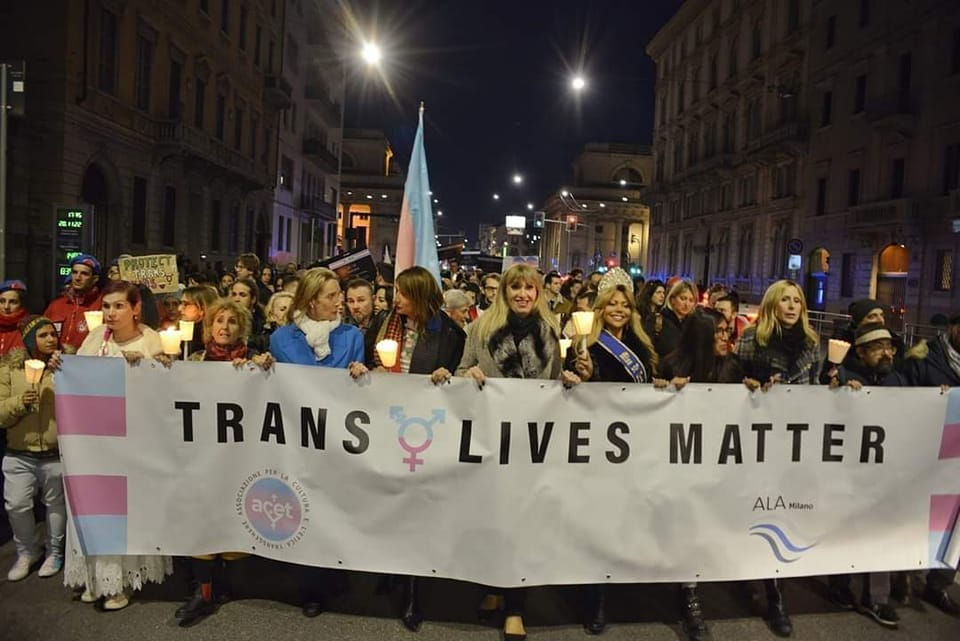
This year’s edition brought together citizens, activists, community organizations, and institutional representatives. Among the participants were the President of the City Council Elena Buscemi, Pierfrancesco Majorino, and Luca Paladini.
The march is organized by ACET – Association for Transgender Culture and Ethics, in collaboration with ALA Milano Onlus Trans Support Services.
Milan, a City of Rights: The Transgender Flag on Palazzo Marino
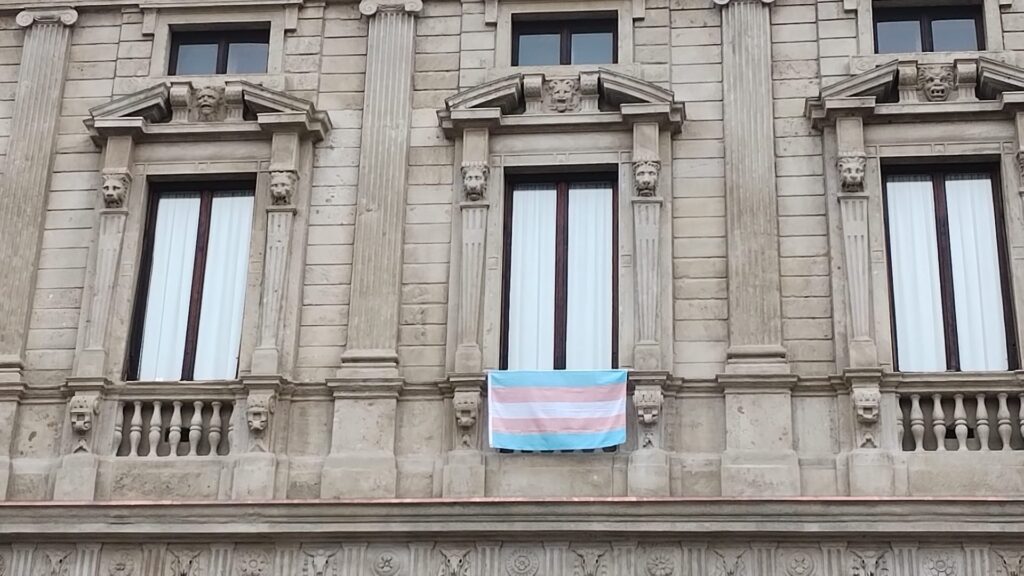
Once again, the transgender pride flag will be displayed on the façade of Palazzo Marino, Milan’s City Hall.
This symbolic yet politically meaningful act reaffirms Milan’s role as one of Europe’s most committed cities when it comes to human rights, LGBTQIA+ inclusion, and transgender visibility.
As part of my institutional work, I am also submitting an official motion to name a public space in Milan after the transgender activists of the 1970s and 1980s, whose struggles paved the way for the 1982 Italian Gender Recognition Law (Law 164).
Transphobic Violence: Global Data and Stories (2024–2025)
Violence against transgender people remains a global human rights crisis. The latest available data show:
- 281 trans people murdered worldwide in just one year
- 92% were trans women
- The youngest victim was 14 years old
- Many were racialised people living in contexts of systemic discrimination
Some of the names remembered during the march include:
- Sara Millerey González Borja, brutally killed in Colombia
- Kesaria Abramidze, murdered in Georgia
- Sam Nordquist, a 24-year-old trans man killed in New York State
The community also honored the “100 Unknown Women of Evin”, transgender detainees who disappeared following the destruction of the women’s ward dedicated to them in Evin Prison, Tehran, as reported by Gay.it and The New York Times. These stories remind us that transphobic violence is not an isolated phenomenon, but a global pattern fuelled by stigma, dehumanization, and political exploitation.
FULL TEXT OF MONICA ROMANO’S SPEECH

Today I want to remember some friends — transgender women, activists — who were incredibly important to me and who are no longer with us.
In the late 1990s and early 2000s, we were just girls.
We were beginning our gender affirmation journeys, trying to become more ourselves, and we met in the few activist spaces that existed back then.I remember our energy, our hope, and also a bit of recklessness.
We wanted to change the world.
And yes — we dreamed too big, and we were a little naïve.
But we were convinced that Italy was ready to change with us.I remember the atmosphere of those years so well.
On July 8th, 2000, the World Pride took place in Rome, right in the middle of the Jubilee Year.
For many of us, it was a turning point.That day, Sylvia Rivera — a pioneer of trans rights in the United States and a key figure in the 1969 Stonewall uprising — stood on stage and said:
“You are all my daughters.”Those words reached even those of us who were not physically there.
They echoed inside us, and they made us feel part of something bigger — part of a lineage, a history of struggle that came long before us.
In those words, we felt recognized.I remember when my friends and I met in Sanremo — on March 8th, 2003 — to protest against a well-known TV host who had excluded a trans actress from a national broadcast.
To be honest, we cared very little about the television show itself.
But Mirella Izzo — who passed away in 2023 — understood that this was a rare chance to speak publicly about something crucial:
the right to work, a right that was systematically denied to trans people in Italy at the time.I remember — as if it happened yesterday — Marcella Di Folco (who passed away in 2010) stepping onto the celebrity walkway outside the Ariston Theatre and shouting:
“Pippo Baudo, come out! The trans women have arrived!”My friends and I were electrified.
We handed out flyers about workplace discrimination, just as Marcella and Mirella had asked.
For the first time, we felt visible — unstoppable.
We ended up on national television, even on satirical shows.
My mother was not very pleased.We went back home by train convinced that we had organized the first demonstration for transgender employment rights.
Only later did we discover we were not the first: in the 1970s and 1980s, other trans women had already opened the path.
We simply didn’t know, because our movement’s memory is fragile.
It breaks.
It disappears.
Too often, it is not passed down.I remember the nights spent preparing signs for Pride marches, telling ourselves that the world would change, and that the doors would finally open for us.
I remember Leslie Feinberg — a communist, transgender, lesbian, and feminist activist — who visited Italy in 2004 to present Stone Butch Blues.
Leslie urged our communities — trans and lesbian — not to divide ourselves.
To fight together.
And I remember the long, tight hug that Leslie and her wife gave each of us before returning to the United States.Seen from here, these memories are bright — so bright that they hurt today.
Because the world is moving backwards.
There are political forces — in Italy, in Europe, and across the world — that openly work to erase transgender people.
Think of Trump, Putin, and Orbán: very different leaders, but united by the same hostility toward our existence.Think, too, of the genocide of the Palestinian people happening before our eyes.
We must never forget the suffering of those who face violence and oppression.
We must recognize in their struggle the same demand for freedom and justice that animates our daily fights.When I look back at those intense years — from the late ’90s onward — I often ask myself:
What was all of that for? Did it matter? Was it useless?
Or — and this is a painful realization I’ve only recently reached —
were we, without knowing it, living in a more favorable season than the one faced by today’s younger trans generations?I don’t have a clear answer.
I’m too involved emotionally to pretend I do.
But I know one thing with certainty:I will not allow our sisters to be forgotten.
Every time one of us dies, we lose a part of our history.
And the world becomes a little colder for those who remain.And I’m not speaking only of the most famous activists — Marcella Di Folco, Mirella Izzo, Deborah Lambillotte, Leslie Feinberg.
I am thinking of the workers of activism: the friends who kept things going quietly in the background.
Silvia, Elisabeth, Brigida, Chiara — and so many others.Something in our movement must never go out.
A torch — a legacy.
And I believe that legacy is sisterhood.That secret tradition through which we become each other’s daughters, mothers, and sisters across generations.
I, too, was once a daughter.
And today — with gratitude and a bit of tenderness — I have become a symbolic mother to some.So let me speak directly to the sisters who are no longer here:
We have not forgotten you — and we never will.
Stay with us.
Help us.
Give us your strength.
Because the dream we held at twenty — to change the world —
we still hold it now.
Fragile, stubborn, alive.You are still with us — in fact,
you are us —
in every step, every voice, every street in which we walk together.
Why This March Still Matters
The Trans Lives Matter March is not only a commemoration.
It is an act of civic responsibility, a moment in which a European city publicly acknowledges that transgender rights are human rights.
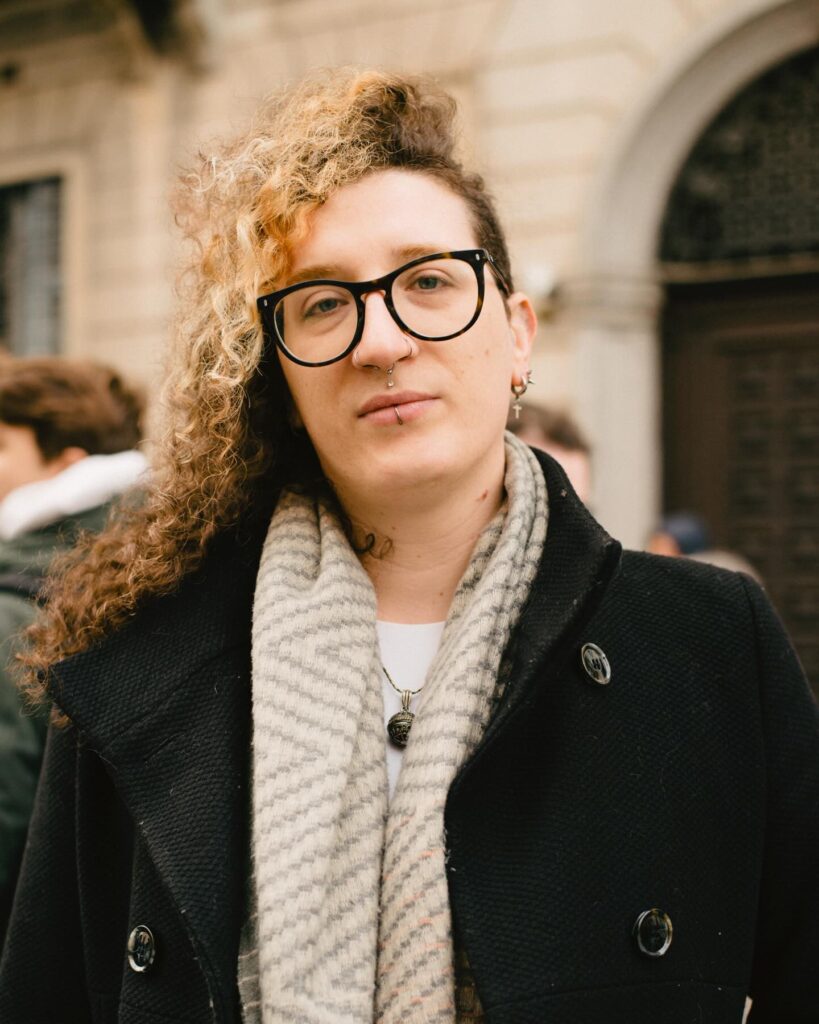
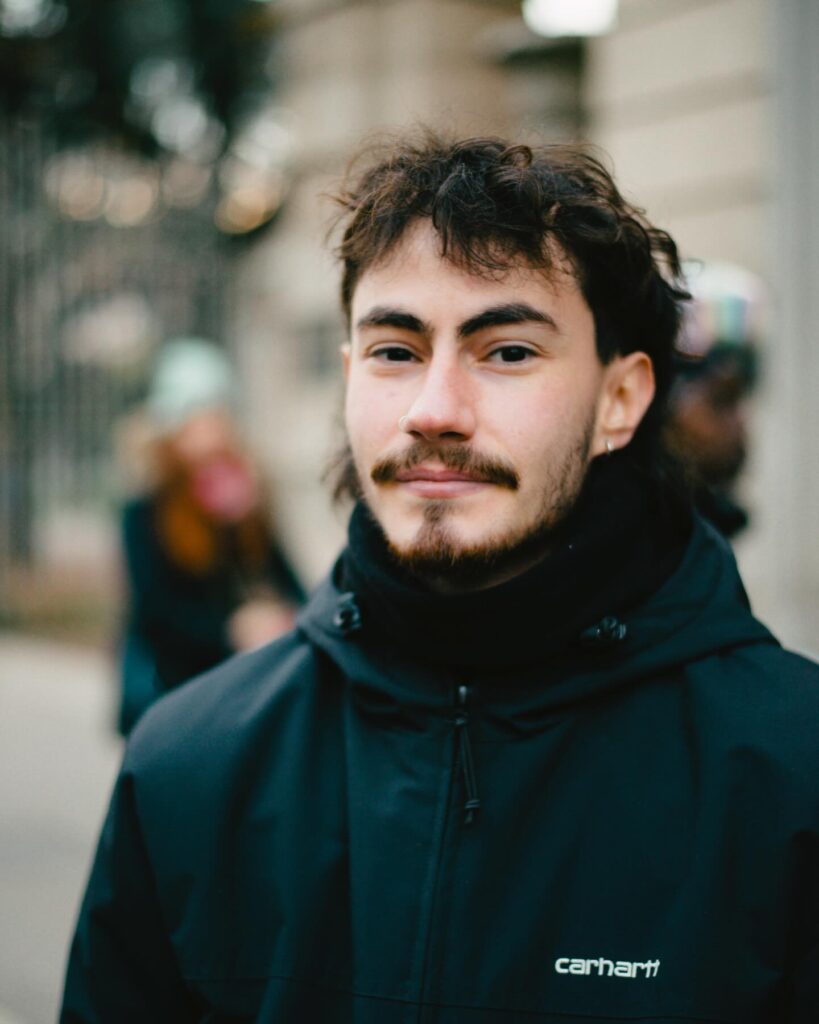
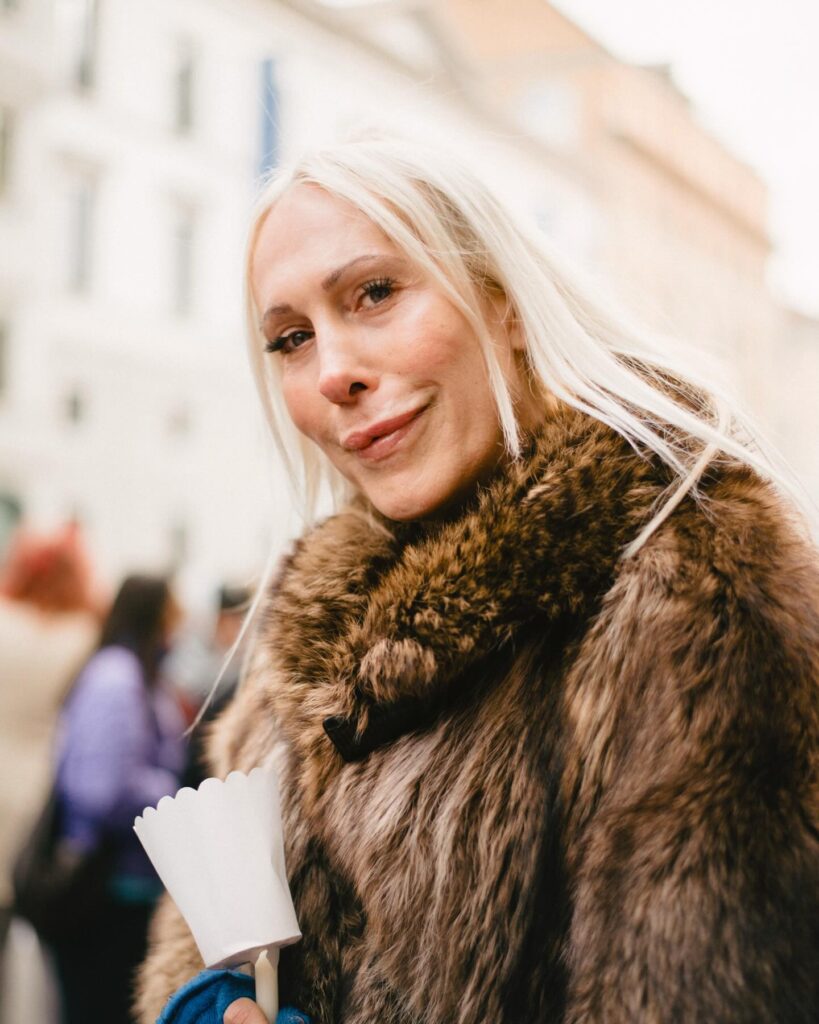
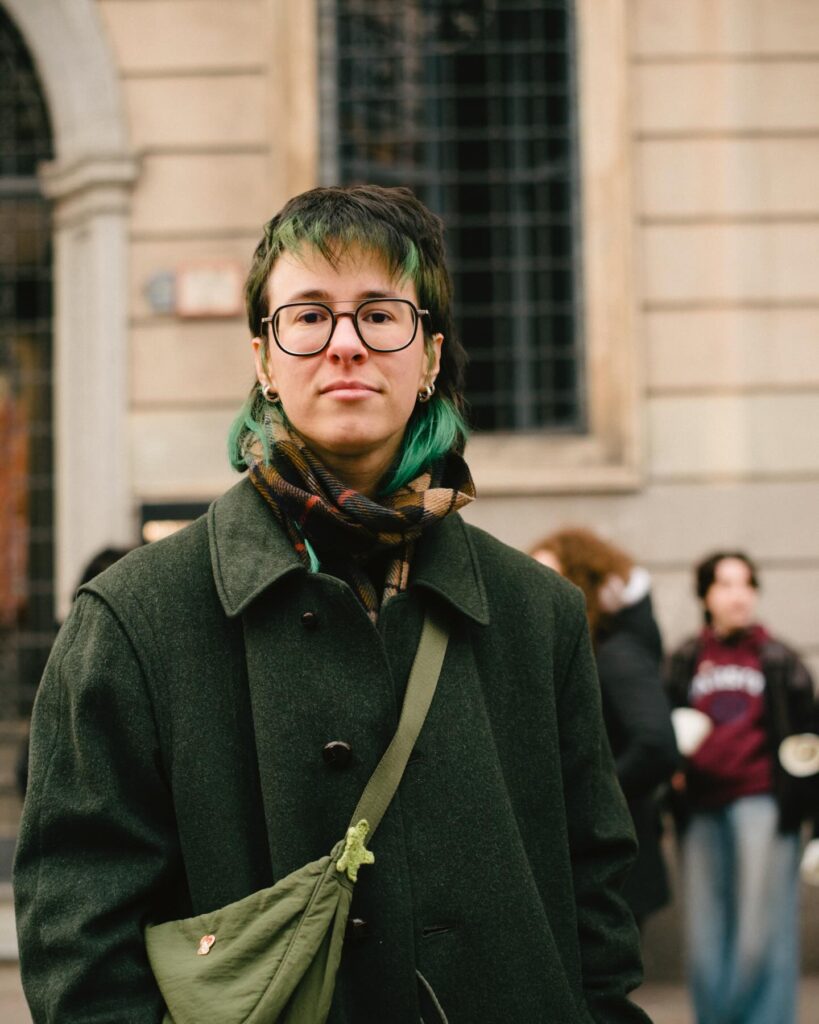
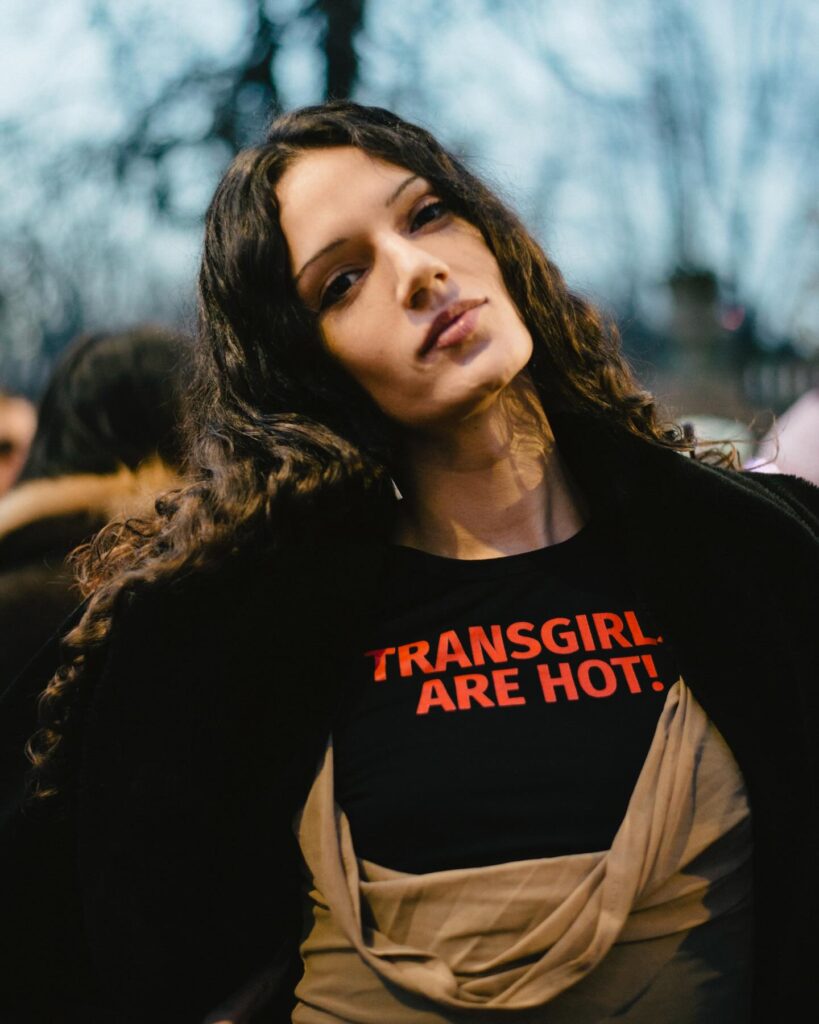
Portraits of Trans Lives Matter March by Clodoveo Petrosino:





Milan continues to play a crucial role in Italy and Europe by:
- defending the dignity and safety of transgender people
- promoting inclusive public policies
- preserving the historical memory of the Italian trans movement
- resisting disinformation, hate speech, and polarization
This march began as my personal initiative, but today it belongs to the entire community.
It has become a shared civic ritual—a space where memory, activism, and institutions meet.
And it speaks not only to Milan or Italy, but to the international community:
a call to defend complexity, dignity, and freedom everywhere.